
Whether you’re a homeowner, landlord, or business owner, the sidewalks in front of your property are more than just concrete slabs; they’re pathways for pedestrians, potential hazards if neglected, and often the first thing visitors notice. Choosing trusted sidewalk repair contractors in Brooklyn ensures that walkways remain safe, attractive, and compliant with city regulations. In this post, we’ll walk you through why professional, code‑compliant repairs matter, what to look for when selecting a contractor, and how proper maintenance benefits everyone.
Introduction
Sidewalks connect neighborhoods, guide daily foot traffic, and play a crucial role in the safety and accessibility of our streets. Yet, in a bustling borough like Brooklyn, sidewalks often bear the brunt of heavy foot traffic, tree-root intrusion, freeze-thaw cycles, utility work, and time. That wear and tear can lead to cracks, uneven slabs, trip hazards, or worse.
That’s where sidewalk repair contractors in Brooklyn come in. These professionals specialize in diagnosing common sidewalk issues, performing repairs or replacements to concrete, and restoring walkways to a safe, smooth, and visually appealing condition. For property owners, hiring reputable sidewalk repair contractors isn’t just about aesthetics; it’s about avoiding legal liabilities, complying with NYC Department of Transportation (DOT) regulations, and ensuring public safety.
In this comprehensive post, we’ll cover:
- the legal and safety reasons to fix sidewalks properly
- common sidewalk problems in Brooklyn and their causes
- How to choose reputable sidewalk repair companies in Brooklyn
- What constitutes quality sidewalk concrete repair in Brooklyn
- typical costs, permits, and timelines
- Tips for maintaining sidewalks to avoid future damage
- and finally, how hiring a reliable contractor benefits you, including a brief mention of one established local company.
By the end, you’ll have a clear understanding of why trusted sidewalk repair contractors in Brooklyn are indispensable and what to look for when hiring one.
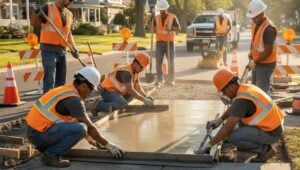
Why Professional Sidewalk Repair in Brooklyn Matters
1.1 Legal Responsibility and Liability
In Brooklyn like the rest of New York City, sidewalks adjacent to private and commercial properties are generally the legal responsibility of the property owner. According to the NYC DOT, under New York City Administrative property owners must install, maintain, and repair sidewalks adjoining their property.
If sidewalks fall into disrepair cracks, uneven slabs, or trip hazards, and cause injury, the owner may be held liable under New York City.
Exceptions exist: for 1‑, 2‑, or 3‑family homes that are owner-occupied and used exclusively as residences, and when damage is caused by city-owned tree roots, the city (via the New York City Parks Department “Trees & Sidewalks Program”) may cover repairs, but only under specific conditions.
For all other properties, multi-family apartment buildings, mixed-use buildings, and storefronts, the owner is fully responsible. Ignoring these obligations can result in a formal Notice of Sidewalk Violation from the DOT.
Consequences of neglect: legal liability, lawsuits, liens, plus potential difficulties selling or refinancing property if a violation is on file.
Because of these legal obligations and risks, relying on professional sidewalk repair contractors in Brooklyn isn’t optional; it’s essential.
1.2 Safety, Accessibility, and Public Perception
Beyond legal duty, well-maintained sidewalks matter for safety, accessibility, and community image:
- Safety & Preventing Injuries: Trip hazards, uneven slabs, and sunken concrete, are major risks for pedestrians, especially the elderly, children, or people with mobility issues. A damaged sidewalk can lead to falls, injuries, and even lawsuits.
- Accessibility: Smooth, even sidewalks make it easier for people using wheelchairs, strollers, or walkers to navigate Brooklyn’s busy streets.
- Aesthetics & Community Value: Cracked, uneven, or patched‑up sidewalks detract from curb appeal and degrade the look of a property or neighborhood. For businesses, it sends the wrong message to customers.
- Long-Term Durability & Cost Savings: Tackling problems early with quality concrete repair reduces the chance of recurring issues, especially damage caused by root intrusion, water infiltration, or structural settling.
By hiring experienced sidewalk repair companies in Brooklyn, property owners invest not only in compliance but in long-term safety, accessibility, and value.
Common Sidewalk Problems in Brooklyn: Causes & Risks
Before hiring a contractor, it helps to understand why sidewalks fail in Brooklyn and what kinds of issues you should watch out for.
2.1 Typical Defects & Hazards
Some of the most common sidewalk issues that trigger DOT violations include:
- Cracks in concrete slabs — small cracks often expand over time, especially with freeze‑thaw cycles.
- Uneven or sunken slabs / Improper slope — when one section settles more than another, creating a tripping hazard or water drainage problems.
- Trip hazards from lifted slabs, broken edges, or protruding hardware (utility covers, patches, etc.)
- Collapsed sidewalks — in severe cases, sections may collapse due to underground issues, water damage, or structural failure.
- Patchwork or mismatched repairs — multiple piecemeal patches over time can result in uneven surfaces and reduced structural integrity.
- Damage from tree roots or city trees — expanding roots can lift or crack concrete slabs, often leading to significant upheaval over time.
- Poor drainage, water infiltration, or sub‑grade settling — often unseen until structural damage or sinking appears.
2.2 Why These Problems Arise in Brooklyn
Brooklyn’s sidewalks are subject to a unique mix of stress factors:
- Heavy foot traffic and urban density: As one of NYC’s most populous boroughs, sidewalks endure constant use from pedestrians, delivery carts, bicycles, pushcarts, not to mention occasional heavier loads near storefronts or loading zones. Over many years, this wear adds up.
- Tree cover and root growth: Many Brooklyn streets are lined with mature trees. While trees add shade and beauty, their roots can and often do interfere with sidewalks beneath. When root intrusion isn’t addressed early, it can severely crack or displace concrete flags.
- Weather and seasonal stress: Freeze-thaw cycles in winter, heavy rain, and water infiltration can deteriorate concrete over time. Water seeps into small cracks when it freezes, and it expands, widening the cracks or lifting slabs.
- Aging infrastructure: Some sidewalks date back decades. Over time, concrete naturally degrades, underlying soil can shift, and prior repairs may become worn or misaligned.
- Utility work and public works activity: Frequent construction, utility repairs, or excavations under Brooklyn streets can displace soil or disrupt sidewalk foundations often leading to sunken or unstable slabs.
- Improper patching or low-quality repairs: When repairs are done haphazardly, with low-grade materials or without addressing root structural issues (sub‑base, drainage), problems often recur or worsen.
Because of these overlapping risk factors, sidewalk maintenance in Brooklyn is a recurring challenge that requires proactive care, proper materials, and compliance with local standards.
How to Choose the Right Sidewalk Repair Contractors in Brooklyn
Not all contractors are created equal. Choosing a contractor with experience, knowledge of NYC codes, and a commitment to quality is vital. Here’s what to look for when hiring sidewalk repair companies in Brooklyn.
3.1 Licensing, Compliance, and DOT Familiarity
- Licensed and credentialed: In New York City, any contractor performing sidewalk repairs, especially if the job costs over a certain threshold, must be licensed. Many times, they should also be registered with the New York City Department of Consumer and Worker Protection (DCWP).
- Familiar with DOT standards: Sidewalk repairs must meet specifications set by the NYC DOT, in terms of concrete mix, slope, alignment, curb edge, drainage, and permits. Using a contractor unfamiliar with DOT specs risks rejection at inspection or recurring issues.
- Permitting and paperwork handled properly: Proper sidewalk repair often requires a permit: for example, a sidewalk construction permit costs linear feet (or portion) at present. A good contractor will guide (or handle) the permit process, coordinate inspections, and submit paperwork to request a final inspection after work is complete.
- Track record with violations & dismissals: If the property has an existing Notice of Sidewalk Violation (NOV), a professional contractor should know how to comply with the Preliminary Inspection Report (PIR): replacing every flagged “square,” ensuring compliance, and requesting a dismissal inspection.
3.2 Quality of Materials and Workmanship
Good sidewalk repair isn’t just slapping down fresh concrete; it’s about durable, long-lasting results. When evaluating contractors:
- Ensure they use high-quality concrete mixes, often higher strength and better bonded than standard retail concrete, especially important in NYC’s freeze-thaw climate.
- Confirm proper sub‑base preparation: removing damaged slabs, assessing soil, ensuring proper drainage, and addressing root issues if needed. Sloppy repair, just patching cracks, leads to repeated problems.
- Ask about durability guarantees: because city inspections often happen after repairs, a contractor should stand behind their work. Some quality contractors offer warranties or guarantee code‑compliant workmanship.
- Confirm finishing and aesthetics: for residential or commercial properties, a smooth, well-finished concrete surface not only looks better, but it also reduces trip hazards and helps with drainage.
3.3 Reputation, References & Reviews
As with any trade, reputation matters. Steps to vet a contractor:
- Check public complaint records — you can search the DCWP database to see past complaints or license issues.
- Ask for past projects — especially sidewalks in Brooklyn or similar neighborhoods; check for photographs, before/after shots, and references from former clients.
- Verify knowledge of local neighborhoods — older neighborhoods may have special considerations: tree roots, uneven subgrade, historic district guidelines, curbs, drainage. A contractor familiar with these challenges will perform better than a general concrete crew.
- Transparency around cost and permit use — a trustworthy contractor will break down costs (labor, materials, permits), outline permit fees, and explain what’s covered vs what may require extra work (e.g., old vaults under sidewalks, tree-root mitigation, curb work).
3.4 Communication, Inspection, and After‑care
Good contractors:
- Walk you through the entire process from permit application to dismissal inspection after completion.
- Provide documentation: receipts, permit numbers, subcontractor lists (if used), photos before & after.
- Advise on maintenance such as regular inspections, managing tree roots, drainage solutions, sealing concrete if needed, and when to plan future maintenance to avoid new issues.
- Help you avoid potential future violations or costly repairs by recommending preventative measures.
Given the legal obligations in Brooklyn (and NYC in general), selecting a contractor based purely on price without verifying license, reputation, or compliance is a risk many property owners come to regret.
What Good Sidewalk Concrete Repair in Brooklyn Looks Like
Understanding what constitutes a “proper” repair helps you evaluate whether a contractor did the job right. Here’s what you or an inspector should expect after a quality sidewalk repair in Brooklyn job.
4.1 Sub‑Base and Foundation: The Hidden Key
- The old, damaged concrete flags are removed entirely (not just surface patched).
- Soil sub-base is evaluated: any loose, water-logged, or root‑displaced soil is excavated and replaced or regraded.
- Drainage is considered especially along curbs or near building edges, so water doesn’t pool and erode the sub-base over time.
4.2 Concrete Mix & Installation
- Use of durable, high-strength concrete mix, often exceeding residential “bag mix” standards designed for freeze-thaw resilience, heavy foot traffic, and long-term durability.
- Proper curing procedures, joint spacing, control joints (to allow expansion/contraction), to prevent future cracking.
- Consistent slab thickness especially important near curbs, driveways, or in areas subject to heavier loads.
- Smooth finishing, proper slope for drainage, and clean joint lines.
4.3 Compliance with Codes & Permits
- Work follows the design standards set by NYC DOT (curb alignment, slope, width, etc.).
- Permits have been filed and obtained before work started; the permit number has been recorded.
- After repair, a dismissal inspection is scheduled with DOT to officially remove any existing violation and certify the sidewalk as safe.
4.4 Attention to Surrounding Context
- If tree roots were the cause, the contractor would address root intrusion, possibly trimming (if allowed), installing root barriers, or re-grading soil to protect the new slabs.
- If the adjoining property includes a driveway, curb, or special pavement (e.g., brick walkway, distinctive sidewalk), the contractor ensures smooth transitions and proper interface.
- For commercial properties, ensure heavy-load zones (e.g., delivery areas) have reinforced concrete or a proper sub-base to prevent early deterioration.
Typical Process, Permits, Costs & Timeline for Sidewalk Repair in Brooklyn
Understanding the process helps property owners plan repairs correctly, avoid DOT violations, and ensure the job proceeds smoothly.
5.1 The Standard Repair Workflow
- Inspection & Assessment: First, walk the sidewalk, identify visible defects, cracks, uneven slabs, root damage, and drainage issues. Some owners hire a contractor to conduct a formal inspection to anticipate DOT requirements.
- Check for Violations: If you have received a Notice of Sidewalk Violation (NOV) from DOT, that comes with a Preliminary Inspection Report (PIR) marking every damaged slab/flag requiring replacement. You must repair within 75 days.
- Hire a Licensed Contractor: Ensure they are registered, experienced with NYC sidewalk standards, and ready to obtain permits.
- Permit Application: A sidewalk construction permit is required currently per 300 linear feet (or portion).
- Sidewalk Replacement or Repair Work: Contractor removes old slabs, prepares sub-base, pours new concrete, finishes, cures, and cleans up.
- Request Dismissal Inspection: Once work is done, request a DOT dismissal inspection to remove the violation from the records.
- Maintenance & Documentation: Keep receipts, photos, permit records, and maintain the sidewalk to avoid future problems.
5.2 Typical Costs & Timeframes
- Permits: As noted, per 300 linear feet (though this can vary).
- Material & Labor: Costs vary widely depending on the scope, number of slabs, sub‑base work, root mitigation, slab size, driveway vs. plain sidewalk, etc. Simple slab replacement may cost less, but full sub‑base repair with root mitigation will cost more.
- Time: A small slab repair (a few flags) may take a day or two; larger walkways or complex jobs (driveways, tree roots, curb work) may take several days to a week, including curing. After completion, a dismissal inspection must be scheduled (timing depends on DOT backlog).
- Hidden costs: If repairs are delayed beyond 75 days after an NOV, the city may do the work and bill you at a higher cost, plus possible interest or liens.
Because of these variables, having an experienced, reputable contractor provide a detailed quote including permit costs, labor, materials, and potential root/drainage mitigation is invaluable.
6. Preventive Maintenance: How to Avoid Frequent Sidewalk Repairs
Once your sidewalks are repaired properly, you still need to maintain them. Prevention reduces long-term costs and ensures safety. Here are best practices and recommendations for ongoing sidewalk maintenance in Brooklyn.
6.1 Schedule Regular Inspections
Set up a routine inspection schedule, quarterly or biannually, especially for older sidewalks or those near large trees. Look for: cracks, small shifts, uneven slabs, signs of root intrusion, drainage problems, or standing water. Many contractors advise doing inspections before and after winter, and after heavy precipitation.
6.2 Manage Tree Roots and Landscaping Carefully
Tree roots are a leading cause of sidewalk damage in Brooklyn. If you have street trees:
- Monitor sidewalk slabs near tree bases.
- Avoid planting new large-rooted trees too close to sidewalks.
- If root damage is visible or suspected, consult a licensed contractor or arborist. Root barriers or a special sub-base may help.
- For city-owned trees eligible under the Trees & Sidewalks Program, you can apply for free or subsidized repair if conditions apply.
6.3 Ensure Proper Drainage and Water Management
Poor drainage accelerates degradation. To prevent water accumulation:
- Make sure sidewalks slope away from the building and toward the street for proper runoff.
- Keep drainage channels, curbs, and nearby drains clear of debris.
- In rainy seasons, check for puddling or pooling. If water sits on the sidewalk for a long time, it may seep in and damage the sub‑base.
6.4 Avoid Quick Fixes and Low-Quality Patching
While it may be tempting to patch visible cracks with a basic concrete mix, this often leads to recurring problems. Cheap patching doesn’t address sub‑base issues, root intrusion, drainage, or structural instability, resulting in repeated repairs.
Whenever possible, invest in a full, proper repair: remove damaged slabs, prep the sub‑base, pour quality concrete, and finish correctly.
6.5 Maintain Records & Stay Ahead of City Notifications
- Keep records of all repair work: contractor name, license number, permit number, photos before & after.
- After repair, perform occasional checks, especially after seasonal changes (freezing, thawing, heavy rains).
- If you receive a formal NOV from DOT, don’t ignore it. Schedule repairs promptly, start work within 75 days, and get an inspection dismissal after completion.
Proactive maintenance saves money, prevents hazards, and preserves property value.
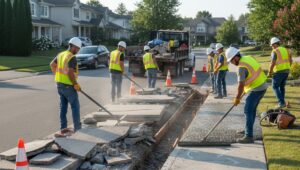
Why Hiring Trusted Sidewalk Repair Contractors in Brooklyn Costs Less in the Long Run
At first glance, hiring a professional contractor with permits, quality concrete, and sub‑base work might seem more expensive than a quick DIY patch. But the long-term benefits typically outweigh those initial costs:
- Avoid repeated repairs: Proper sub‑base preparation and correct concrete mix reduce the chance of future cracks, uneven slabs, and root‑related damage.
- Reduce liability risk: Fixing sidewalks properly helps protect property owners from lawsuits or liability claims if someone trips or falls.
- Improve property value and curb appeal: Smooth, well-maintained sidewalks contribute positively to a property’s appearance beneficial if you plan to sell or rent.
- Comply with law and avoid fines/liens: Ignoring DOT violations can result in the city stepping in, doing the repair, and billing you often at a higher cost, plus interest and liens.
- Peace of mind: Working with a reputable contractor means you don’t have to worry about code compliance, permits, inspections, or follow-up issues. You get a done-right job once.
Because of these advantages, hiring quality sidewalk repair contractors in Brooklyn is an investment, not just an expense.
Spotlight on a Local Contractor
If you’re looking for a fully licensed, experienced, and customer-oriented option for your Brooklyn sidewalk repair needs, one reputable firm to consider is NYC Sidewalk Repair. With years of experience working across all five boroughs and a deep understanding of local codes and regulations, they’ve helped many property owners bring their sidewalks back to code, combining safety, durability, and visual appeal.
Conclusion
Sidewalks are more than just concrete; they’re integral parts of urban infrastructure, affecting safety, accessibility, aesthetics, and property value. In Brooklyn, where foot traffic is heavy, and sidewalks endure a unique blend of environmental stressors, regular maintenance and proper repair aren’t optional; they’re essential.
Hiring trusted sidewalk repair contractors in Brooklyn ensures that sidewalks are repaired with the right materials, to code, with proper permits, and with long-term durability in mind. This not only helps property owners avoid legal liability and DOT violations but also enhances the safety, functionality, and curb appeal of their properties.
By understanding common sidewalk hazards, legal responsibilities, and what to look for in a reputable contractor, you’ll be well-equipped to maintain smooth, safe, and attractive walkways. And for a reliable, experienced partner in this process, consider reaching out to NYC Sidewalk Repair, a firm familiar with Brooklyn’s sidewalks, DOT requirements, and the real needs of property owners.