
Looking for reliable sidewalk contractors in New York City to handle residential or commercial sidewalk repair, replacement, or maintenance? Whether you’re a homeowner, property manager, or business owner, hiring experienced and licensed contractors who understand NYC regulations and standards can save you time, money, and headaches. In this post, we explore what makes a top‑rated sidewalk contractor in NYC, what rules you need to know, and how to choose the right company for your project.
Why Quality Sidewalk Work Matters in NYC
Sidewalks are much more than just concrete slabs underfoot; they’re a vital part of New York City’s pedestrian infrastructure. A properly maintained sidewalk ensures safety for pedestrians, meets local regulations, and protects property owners from liability. In NYC, sidewalks adjacent to private property fall under the care of property owners for both residential and commercial buildings.
Neglecting sidewalk maintenance can lead to dangerous trip hazards, injuries, potential lawsuits, and costly fines or liens. On the other hand, timely repair or replacement done by experienced professionals keeps your property compliant, safe, and visually appealing. That’s why selecting the right sidewalk contractors NYC (or “sidewalk contractors in New York City”) is crucial.
In this blog post, we’ll cover:
- The legal and regulatory landscape for sidewalk repair and replacement in NYC
- What to look for when hiring contractors
- The differences between repair vs replacement
- Costs, permits, and compliance requirements
- How to choose the best contractor for your project
- A few recommended characteristics of top‑rated sidewalk contractors in NYC
Until the conclusion, we’ll refer once to a trusted name in the industry as an example of a company with NYC‑wide experience and credibility.
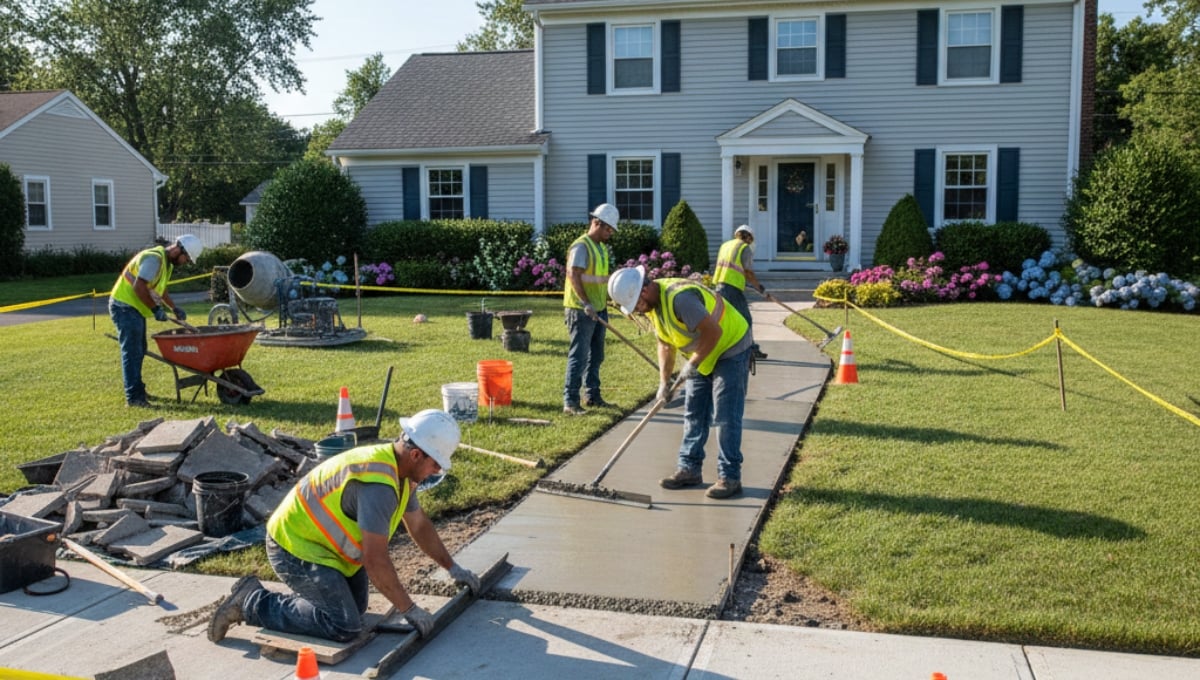
Understanding the Legal & Regulatory Framework
Who Is Responsible for Sidewalk Maintenance?
- Under the city’s regulations, property owners are responsible for installing, repairing, repaving, or maintaining sidewalks abutting their properties, including any corner quadrant.
- That applies to residential, mixed-use, and commercial properties.
- However, there’s a limited exception: for one‑, two‑, or three‑family owner‑occupied homes used exclusively for residential purposes, certain sidewalk repairs, especially those caused by city‑owned trees, may be covered under the city’s NYC Parks Department Trees & Sidewalks Program.
- Otherwise, if you own a commercial property, condo, coop, rental building, or any non‑qualifying residential property, sidewalk maintenance is your responsibility.
Why It Matters: Liability & Compliance
- If sidewalks are unsafe, cracked, uneven, missing flags, unstable cellar doors, or other hazards and someone is injured, the property owner may be held liable under of the Administrative Code.
- The city (via New York City Department of Transportation, DOT) conducts inspections. If defects are found, it issues a Notice of Sidewalk Violation.
- After a violation, property owners generally have 75 days to complete repairs. If they fail to act, the city may perform the repairs and bill the owner, often at a higher cost.
- For significant repair or replacement work, property owners must obtain the proper sidewalk permits before work can begin.
What Do Permits & Regulations Require
- A “Sidewalk Construction Permit” is required for most repair or replacement jobs affecting more than minimal square footage or when addressing a violation. The permit fee is roughly per 300 linear feet of sidewalk (additional permits may be needed for corner properties).
- Contractors must be licensed (registered with city licensing authorities) and carry proper insurance (Commercial General Liability, Workers’ Compensation) before the DOT issues a permit.
- For sidewalks in certain commercial zoning districts (C4‑4 through C4‑7, C5, C6) or in historic districts, special materials or concrete finishes may be required.
- Where a sidewalk passes over a vault, subway structure, or other unusual subsurface condition or involves cellar doors or gratings, additional approvals from other agencies (e.g., transit authorities or the New York City Landmarks Preservation Commission for historic districts) may be required.
What Makes a Top‑Rated Sidewalk Contractor in NYC
When searching for “sidewalk contractors NYC,” “sidewalk repair near me,” or “NYC sidewalk replacement,” you want a contractor who brings more than just a hammer and some concrete. Here’s what distinguishes top‑ranked, reputable firms:
1. Proper Licensing and Insurance
- They are properly licensed under city regulations (e.g., licensed by the relevant city agencies, registered with licensing boards).
- They carry Commercial General Liability (CGL) insurance and Workers’ Compensation to protect property owners (and themselves) in case of accidents or damage.
- They pull all necessary permits (especially sidewalk construction permits) before beginning work. Skipping permits may result in fines or violations later.
2. Familiarity with NYC DOT Standards & Codes
- They understand and follow the standard specifications set out by the DOT, including concrete slab thickness (4″ for sidewalk, 7″ for driveways or corner quadrants), joint layout, material requirements, etc.
- If your property is in a commercial or historic district, they know the additional compliance requirements (e.g., pigmented concrete, special joints, landmark considerations).
3. Experience with Residential and Commercial Projects
- A contractor who has worked on a variety of properties from single‑family homes to large commercial buildings will understand the differing demands, timelines, and compliance needs of each.
- They can handle everything from small patch repairs to full sidewalk replacement, including driveway sections, curb ramps, and corner quadrants.
4. Knowledge of Permits, Inspections & DOT Processes
- Skilled contractors guide property owners through obtaining permits, plan submission (if required), and final inspection.
- They help coordinate with DOT scheduling, especially important if there is a Notice of Sidewalk Violation.
5. Transparent Communication & Documentation
- They provide a clear, written scope of work, cost estimates, and schedule before starting.
- They document existing conditions (e.g., photos before work, marked flags) crucial if there is a dispute or later DOT inspection.
- After work, they assist (or remind) you to request a “dismissal inspection” from DOT to officially clear any violation.
6. Commitment to Long-Term Quality and Safety
- Use of high-quality concrete, proper foundation base, correct slab thickness, reinforcement (if needed), proper curing and finishing.
- Consideration of drainage, slope, water run-off, tree roots, and future maintenance not just a quick patch.
- Guarantee or warranty for the work (often contractors provide 1+ years for workmanship; the city offers its own guarantee if DOT does the work).
Repair vs. Replacement: Making the Right Decision
When you contact a contractor, you’ll often be faced with a decision: should you repair the damaged sidewalk or replace it entirely? The answer depends on the condition, severity of damage, long‑term goals, and budget.
When Repair Makes Sense
Consider repair when:
- Damage is limited to minor cracks, surface spalling, small holes, or uneven slabs no serious, structural damage.
- Only a few flags are loose or uneven.
- You want to address liability quickly and affordably.
- The rest of the sidewalk is in good condition and meets DOT standards.
Pros of repair: Lower upfront cost, faster turnaround, minimal disruption.
Cons: May not last as long as a full replacement; surface-level fixes might mask deeper issues; you might need repeated maintenance.
When Replacement Is the Better Option
Replacement is usually more suitable when:
- Multiple concrete flags are cracked, broken, or sinking.
- The base beneath the concrete is compromised (soil shifting, poor foundation, water runoff problems).
- The sidewalk has irregularities like uneven slope, drainage issues, or poor alignment.
- You plan to do other upgrades (driveway repair, curb ramp installation, improved drainage, accessibility features).
- You want a long-term, durable solution that meets all DOT specs and avoids frequent fixes.
Pros of replacement: Consistent surface, longer lifespan, compliance with DOT code, often builds property value, and reduces future maintenance costs.
Cons: Higher initial cost, longer disruption, need for permits and inspections, possibly more paperwork.
Typical Costs, Permitting, and What to Expect
Permits & Paperwork
- A Sidewalk Construction Permit from NYC DOT is typically required for significant repairs or full replacement. Corner properties or larger jobs may need multiple permits.
- The contractor or property owner must submit a diagram showing the location of the work, distances to curbs and buildings, and other relevant details. Often, a licensed engineer or architect will need to seal the plan.
- Contractor must provide proof of insurance (CGL, Workers’ Comp) before the permit is issued.
- After the work is done, a dismissal inspection by DOT is required to clear any outstanding violations.
What a Typical Process Looks Like
- Initial inspection/assessment — contractor evaluates damage, identifies needed scope (repair vs replacement), checks base, drainage, slope, etc.
- Estimate & proposal — detailed cost breakdown including materials, labor, permits, and timeline.
- Permit application — contractor (or owner) submits necessary documents to NYC DOT, pays permit fee, and obtains permit.
- Job scheduling and preparation — excavation, removal of old slabs, prepping base, forming, plumbing/drainage adjustments if necessary.
- Pouring concrete/installation — slab poured to DOT specs (correct thickness, expansion joints, finishing), driveways or ramps poured thicker if required.
- Curing and finishing — allowing concrete to cure properly; may involve curing compound or covering; finishing surface to match existing sidewalks if needed.
- Clean-up and final inspection — contractor cleans site, requests dismissal inspection via NYC DOT (e.g., via 311), and ensures paperwork is filed.
- Final report and documentation — photos, compliance paperwork, permit closure, proof of insurance, warranties, etc.
Why Hiring a Trusted Contractor Is Crucial: Risks of DIY or Low-Quality Work
Attempting sidewalk repairs on your own or hiring an unlicensed, uninsured contractor may seem like a way to save money. But in NYC, this can lead to serious problems:
- If the work doesn’t meet DOT standards (wrong slab thickness, improper base, poor finishing, bad drainage), it may fail inspection or worse, cause injuries later.
- Without proper permits, you risk fines or violations and may be required to redo the work.
- In case of injury (trip‑and‑fall), liability falls on the property owner, which could lead to lawsuits and expensive legal costs.
- If the city issues a violation and the owner does not comply, DOT may step in, do the work themselves, and bill the owner, often at a higher price than if you hired a reliable contractor.
- Poor‑quality repairs often don’t last, meaning frequent fixes, added cost, and repeated disruption.
The Value of Reputation; And the Role of ‘NYC Sidewalk Repair’
When you choose a contractor with a solid reputation, you get more than just a patched walkway; you get peace of mind. A reputable firm understands the local codes, has experience with both residential and commercial jobs, and knows the permit/inspection process inside and out.
One example of such a company is NYC Sidewalk Repair, a firm that has completed multiple projects across NYC and consistently delivered compliant, high‑quality sidewalk repair & replacement services (for residential and commercial clients alike). Because they focus on compliance, quality materials, and professional workmanship, they earn trust and referrals from property owners throughout the city.
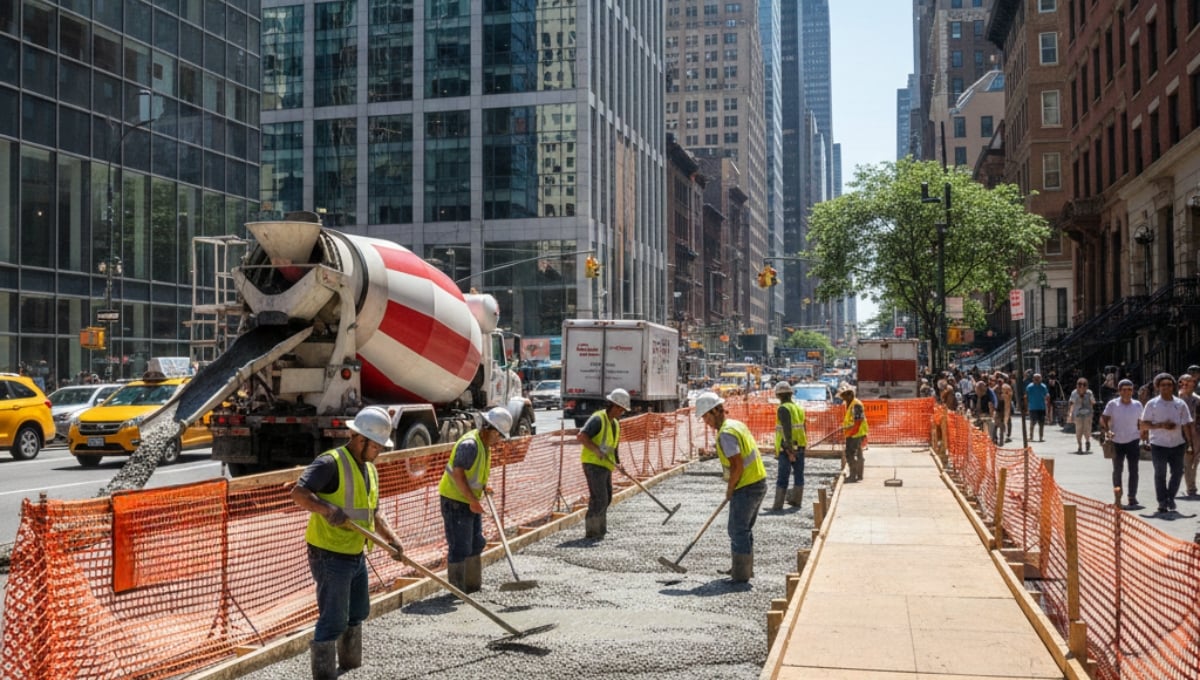
Professional patching goes beyond simply filling cracks or holes. It requires precise attention to joint placement, proper reinforcement, and controlled curing procedures to ensure that the repaired sections bond correctly with the surrounding concrete. Following industry standards, such as those set by the International Concrete Repair Institute (ICRI), helps guarantee durability and long-term performance.
When working with an experienced company like this, property owners can rest assured that:
- The right permits will be pulled.
- The work will meet DOT standards (slab thickness, joint layout, drainage, concrete mix, finishing).
- Proper insurance and liability coverage are in place.
- Projects will be managed transparently, with documentation and follow-through (including final inspection and dismissal of any violations).
What to Expect Once You Hire a Top‑Rated Contractor
When you hire a top‑rated contractor for your sidewalk project, the process generally flows smoothly and transparently. Here’s what a well‑managed sidewalk repair or replacement project typically looks like:
- Pre‑work assessment — contractor inspects existing sidewalk, identifies damage, notes base condition, slope, drainage, and potential tree root or utility issues.
- Written estimate and scope of work — you receive a detailed proposal covering everything from demolition to final finishing, including permits and cleanup.
- Permit application — contractor pulls NYC DOT permits (and any other necessary city approvals) before work begins.
- Site preparation and safety measures — area is blocked off safely, pedestrian access managed, protective barriers placed if needed.
- Demolition and removal — old concrete removed, proper disposal arranged.
- Base preparation and leveling — excavation, base layer (gravel or crushed stone), compaction, ensuring proper slope for drainage.
- Concrete pouring and finishing — correct slab thickness (4″ for sidewalk, 7″ for driveways/corners), joint layout, surface finishing, control joints as needed.
- Curing — concrete allowed to cure per standards (weather and season permitting) to ensure strength and longevity.
- Clean up and restoration — site cleaned, adjacent landscaping or property restored.
- Final inspection and documentation — after curing, request final inspection through NYC DOT (e.g., via 311), receive dismissal of any violation, collect final paperwork, and warranty.
With a good contractor, this whole process can take from a few days (for minor repairs) to several weeks (for full replacements or complex jobs), with minimal disruption and full compliance.
Benefits of Hiring a Top‑Rated Sidewalk Contractor (and Why It’s Worth It)
While hiring a reliable contractor may cost more upfront than a DIY approach or an unlicensed handyman, the long-term benefits overwhelmingly favor professionalism:
- Compliance with NYC laws and codes — reduces risk of DOT violations, penalties, and liens.
- Reduced liability — properly executed sidewalks minimize trip hazards, decreasing the risk of lawsuits or injury claims.
- Durable, high-quality results — proper materials, base, and workmanship mean sidewalks that last decades rather than years.
- Better property value and curb appeal — a well-built, clean sidewalk improves the look and value of residential and commercial properties.
- Time savings and convenience — the contractor handles permits, scheduling, inspections, and cleanup; you get a turnkey solution.
- Peace of mind — licensed, insured, experienced contractors offer warranties and documentation to back their work, giving you confidence in safety and compliance.
How to Get Started: Hiring Your Sidewalk Contractor
If you’re ready to move forward, here’s a simple plan to begin:
- Search for “sidewalk repair near me,” “sidewalk contractors NYC,” or “NYC sidewalk replacement.”
- From the results, shortlist 3–5 contractors. Look for licensed, insured companies with strong reviews and recent work photos.
- Contact them and request a free assessment, ask for the license number, insurance proof, and permit capability.
- Compare written estimates: evaluate scope, materials, timeline, permit fees, cleanup, and warranty.
- Ask about scheduling, potential disruption, and the timeline for inspections.
- Once you choose a contractor, confirm they will handle permits and the final DOT inspection.
- Keep documentation: photos before and after, permit copies, final inspection records, and warranty paperwork.
With this approach, you’ll avoid common pitfalls, ensure compliance with city regulations, and get a safe, long‑lasting sidewalk for your property.
Conclusion
Choosing the right sidewalk contractors in New York City isn’t just about finding someone with concrete and a shovel; it’s about partnering with professionals who understand NYC’s regulations, carry appropriate licenses and insurance, and deliver work that meets or exceeds DOT standards. For both residential and commercial properties, the difference between a quick patch and a properly engineered, code‑compliant sidewalk is substantial: in safety, durability, legal compliance, and long-term costs.