
In the bustling neighborhoods of Brooklyn, your sidewalk is more than just a path. It’s a critical part of public safety, property value, and legal compliance. When cracks appear, slabs shift, or trip hazards emerge, concrete sidewalk repair in Brooklyn becomes essential. Whether you’re a homeowner facing a DOT violation or a business owner maintaining high-traffic walkways, code-compliant results that stand up to New York’s harsh winters and urban demands.
This comprehensive guide covers everything you need to know, from identifying problems to choosing the right sidewalk repair contractor in Brooklyn. We’ll explore proven techniques, local regulations, cost factors, and best practices. By the end, you’ll have the knowledge to protect your property, avoid fines, and keep pedestrians safe.
Introduction to Concrete Sidewalk Repair in Brooklyn
Brooklyn’s sidewalks endure constant stress: heavy foot traffic, delivery trucks, freeze-thaw cycles, and aggressive tree roots. New York City law places full responsibility for maintenance on property owners. Ignoring defects isn’t just unsightly, it can lead to costly violations, personal injury lawsuits, and liens on your property.
Concrete sidewalk repair in Brooklyn addresses these issues head-on, restoring safety and aesthetics while meeting strict NYC Department of Transportation (DOT) specifications. Professional Brooklyn concrete repair isn’t a one-size-fits-all fix. It ranges from simple crack sealing to full slab replacement, always prioritizing structural integrity, proper drainage, and ADA compliance where required.
Homeowners and property managers often search for a reliable sidewalk repair contractor in Brooklyn or concrete contractors in New York because DIY attempts frequently fail to meet code, resulting in repeated repairs. In this 4,000+ word guide, we dive deep into every aspect of concrete sidewalk repair in Brooklyn, empowering you with expert insights drawn from industry standards and real-world urban conditions.
Timely intervention prevents small problems from escalating. A ½-inch trip hazard or ¼-inch full-depth crack qualifies as a defect under DOT rules, triggering violations that must be fixed within 75 days. Whether your project involves minor patching or complete reconstruction, following best practices ensures your investment lasts 20–30 years or more.
Why Concrete Sidewalk Repair in Brooklyn Matters for Property Owners
Sidewalks in Brooklyn serve as the public face of your property and a vital community pathway. Neglected Brooklyn sidewalk repair creates liability risks: property owners can be held responsible for injuries caused by defective sidewalks. The city’s sidewalk repair program handles only a fraction of the work, leaving most responsibility to owners.
Beyond liability, well-maintained sidewalks boost curb appeal, support neighborhood aesthetics (especially in historic districts), and comply with accessibility standards. Concrete sidewalk repair in Brooklyn also addresses environmental factors unique to the borough, coastal humidity in areas like Dumbo, expansive clay soils in parts of Flatbush, and the relentless pressure from mature street trees planted decades ago.
Investing in professional Brooklyn concrete repair protects your property value. Real estate experts note that curb appeal, including pristine sidewalks, can increase home values by 5–10%. Moreover, addressing issues promptly avoids escalating costs from emergency repairs or city-forced work, which often carries premium pricing and liens.
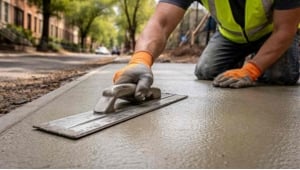
Common Problems Requiring Concrete Sidewalk Repair in Brooklyn
Brooklyn sidewalks typically show several recurring defects:
- Cracks and Fractures: Hairline to full-depth cracks wider than ¼ inch, often running joint-to-joint.
- Trip Hazards: Vertical displacements of ½ inch or more between slabs.
- Sunken or Raised Slabs: Caused by soil settlement or root uplift.
- Spalling and Surface Erosion: Flaking concrete from water intrusion and freeze-thaw cycles.
- Undermined Flags: Voids beneath slabs, causing rocking or loose sections.
- Improper Slope or Pooling: Water retention leading to further deterioration.
- Hardware Defects: Protruding utility covers or cellar doors.
These issues are especially prevalent in older Brooklyn neighborhoods, where many sidewalks date back 50–100 years. DOT inspectors flag these during routine patrols, issuing Notices of Violation that demand swift concrete sidewalk repair in Brooklyn.
Root Causes of Damage in Brooklyn Sidewalks
Understanding causation is key to effective, lasting Brooklyn concrete repair:
- Freeze-Thaw Cycles: Winter temperatures fluctuate around freezing. Water seeps into micro-cracks, expands upon freezing, and widens damage. Brooklyn’s humid coastal climate exacerbates this.
- Tree Root Intrusion: Street trees planted by the city (often London planes or maples) send aggressive roots seeking moisture, heaving slabs upward.
- Soil Settlement and Erosion: Poor initial compaction, heavy rain runoff, or leaking utilities wash away sub-base support.
- Heavy Traffic and Loads: Trucks, moving vans, and construction equipment compress weak areas.
- Poor Original Construction or Materials: Inadequate thickness (should be 4 inches minimum for residential, 6–8 for commercial), lack of reinforcement, or substandard mixes.
- Chemical Exposure: Road salt, de-icers, and urban pollutants accelerate spalling.
- Age and Wear: Concrete naturally degrades over decades without maintenance.
Recognizing these helps sidewalk repair contractor Brooklyn teams address root causes, not just symptoms, preventing recurrence.
When to Repair Versus Fully Replace Your Sidewalk
Not every defect requires full replacement. Here’s a decision framework:
- Repair (Patch or Partial): Suitable for isolated cracks under ¼ inch wide, minor spalling, or small surface defects. Methods include crack filling with flexible sealants, polymer-modified patching compounds, or partial-depth repairs.
- Full Slab Replacement: Necessary when cracks extend joint-to-joint, slabs are undermined, trip hazards exceed ½ inch, or more than 25–30% of the area is damaged. DOT often mandates this for violation removal.
- Leveling/Grinding: Diamond grinding or mud-jacking (slab jacking) can correct minor unevenness without full removal.
- Overlay or Resurfacing: Thin concrete overlays or self-leveling compounds for widespread surface wear, provided the base remains sound.
A licensed concrete repair company in Brooklyn will perform a thorough inspection, measure defects against DOT criteria, and recommend the most cost-effective, compliant solution. Attempting to patch severe damage often leads to failure within 1–3 years.
DIY Concrete Sidewalk Repair Brooklyn: Pros, Cons, and Realistic Limitations
Many homeowners wonder if they can handle concrete sidewalk repair in Brooklyn themselves to save money. Small surface cracks can sometimes be addressed DIY-style:
- Clean the area thoroughly.
- Undercut cracks for better bonding.
- Apply concrete patch or resurfacer per manufacturer’s instructions.
- Cure properly with plastic sheeting or curing compound.
However, sidewalk repair contractor NYC professionals strongly caution against DIY for anything beyond minor cosmetic fixes. Reasons include:
- Permit Requirements: Work over 25 square feet or addressing violations requires a DOT permit. Only licensed contractors can pull permits in most violation cases.
- Code Compliance: DIY repairs frequently fail DOT specs for thickness, mix design, slope (1/4 inch per foot toward curb), and reinforcement.
- Liability and Longevity: Improper bonding or inadequate preparation leads to quick failure, potential injuries, and repeated violations.
- Safety and Tools: Breaking out old concrete, handling rebar, and achieving a professional broom finish demand experience and equipment most homeowners lack.
Professional repairs typically last 20+ years versus 1–3 years for amateur work. For compliance and peace of mind, hire a sidewalk repair contractor in Brooklyn.
Choosing the Right Sidewalk Repair Contractor in Brooklyn or Sidewalk Repair Contractor NYC
Selecting a qualified partner is the most important decision in your concrete sidewalk repair in Brooklyn project. Look for:
- Full licensing with the NYC Department of Consumer and Worker Protection (DCWP) and DOT-approved status.
- Proven local experience, ask for Brooklyn-specific references, and before/after photos.
- Insurance (general liability + workers’ comp) and bonding.
- Knowledge of current DOT specifications, ADA guidelines, and historic district requirements.
- Transparent bidding with detailed scopes, timelines, and warranties (typically 2–5 years).
- Ability to handle permit acquisition and violation dismissal inspections.
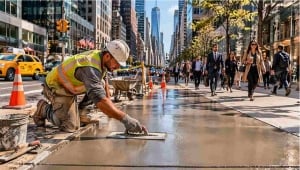
A reputable concrete repair company in Brooklyn will conduct a free on-site assessment, explain options clearly, and coordinate with utilities or the Parks Department if tree roots are involved.
For expert guidance on complex projects, consider consulting with NYC Sidewalk Repair, a trusted name delivering compliant, high-quality results across the borough.
Avoid low-ball bids that cut corners on materials or skip proper sub-base preparation; these often lead to callbacks and higher long-term costs.
The Professional Concrete Sidewalk Repair Brooklyn Process
Experienced sidewalk repair contractor Brooklyn teams follow a meticulous, DOT-compliant workflow:
- Initial Assessment and Permitting: Inspect defects, measure areas, photograph conditions, and submit permit application.
- Site Preparation and Safety Setup (Day of work): Install barricades, traffic control per DOT rules, and protective sheeting.
- Demolition and Removal: Saw-cut clean edges around damaged flags using masonry blades. Break out concrete with jackhammers or saws. Remove debris and inspect sub-base.
- Sub-Base Restoration: Excavate unstable soil, add and compact crushed stone or gravel (minimum 4–6 inches), and ensure proper drainage.
- Formwork and Reinforcement: Install straight, level forms. Place rebar or wire mesh as required by specs (especially for larger areas).
- Concrete Pour: Use DOT-approved mix (typically 4,000 PSI air-entrained concrete for freeze-thaw resistance). Pour, vibrate for consolidation, and screed level.
- Finishing: Apply broom finish for slip resistance. Tool control joints to match the existing pattern.
- Curing and Protection: Cover with wet burlap or curing compound. Maintain for 7+ days; avoid traffic for 24–72 hours depending on conditions.
- Final Inspection and Cleanup: Schedule DOT dismissal inspection to remove the violation. Restore adjacent areas and clean the site.
The entire process for a typical residential job (50–200 sq ft) often completes in 1–3 days, with full curing before heavy use.
Materials and Advanced Techniques in Brooklyn Concrete Repair
Quality materials distinguish professional Brooklyn concrete repair:
- Air-Entrained Concrete: Improves freeze-thaw resistance with microscopic air bubbles.
- Fiber-Reinforced or Polymer-Modified Mixes: Enhance tensile strength and flexibility for crack resistance.
- Epoxy Injection or High-Performance Sealants: For structural crack repair.
- Rapid-Set Formulations: Minimize downtime in high-traffic areas.
Advanced techniques include:
- Slab Jacking/Mudjacking or Polyurethane Foam Injection: Lift sunken slabs without full replacement.
- Diamond Grinding: Level trip hazards while preserving original concrete.
- Cross-Stitching and Dowel Bar Retrofit: For load-transfer across joints in larger repairs.
- Decorative Stamping or Coloring: Match historic Brooklyn aesthetics where required.
Concrete contractors in New York stay current with these innovations to deliver superior durability.
Best Practices and Expert Tips for Long-Lasting Concrete Sidewalk Repair in Brooklyn
- Address root causes, install root barriers, or consult arborists before repair.
- Ensure proper slope and drainage to prevent water pooling.
- Match existing joint patterns and color for seamless appearance.
- Schedule repairs in mild weather (spring/fall) for optimal curing.
- Choose contractors who guarantee work against settlement or cracking.
- Document everything with photos and contracts for insurance or resale purposes.
- Consider preventive sealers after curing to repel water and chemicals.
Following these tips maximizes the return on your concrete sidewalk repair in Brooklyn investment.
Navigating NYC Regulations, Permits, and Violations for Brooklyn Sidewalk Repair
NYC rules are strict:
- Property owners must repair defects within 75 days of a violation notice.
- Permits are mandatory for most work; fees start per 300 linear feet.
- Corner properties incur extra fees and may need quadrant repairs.
- Historic districts require Landmarks Preservation Commission approval.
- Tree-related damage on 1–3 family homes may qualify for city assistance in some programs, but owners generally remain responsible.
A professional sidewalk repair contractor in Brooklyn manages all paperwork, ensuring compliance and swift violation removal to prevent liens.
The Benefits of Timely Brooklyn Sidewalk Repair
- Enhanced pedestrian safety and reduced liability.
- Avoidance of fines, liens, and city-performed emergency work (often more expensive).
- Increased property value and neighborhood pride.
- Compliance with ADA and DOT standards.
- Prevention of cascading damage to curbs, driveways, or foundations.
Proactive Brooklyn concrete repair pays dividends for years.
Maintenance Tips to Prevent Future Concrete Sidewalk Repair in Brooklyn
- Sweep and power-wash regularly.
- Clear snow and ice promptly (owner’s responsibility).
- Inspect annually for new cracks or heaving.
- Maintain gutters and downspouts to direct water away.
- Avoid parking heavy vehicles on sidewalks.
- Apply penetrating sealers every 3–5 years.
- Monitor nearby trees and consult professionals for root management.
Consistent upkeep extends the life of your repaired sidewalk dramatically.
Conclusion: Invest in Professional Concrete Sidewalk Repair in Brooklyn Today
Concrete sidewalk repair in Brooklyn is a vital investment in safety, compliance, and property stewardship. By understanding common problems, choosing qualified sidewalk repair contractors in Brooklyn or sidewalk repair contractors in NYC, and following DOT-approved best practices, you ensure durable, attractive sidewalks that serve your community for decades.
Don’t wait for a violation or accident to force action. Proactive Brooklyn concrete repair through experienced concrete contractors in New York delivers the best value and peace of mind. Whether your needs involve minor patching or complete reconstruction, the right approach transforms potential headaches into long-term assets.